


Reading the Craft Behind the Finished Object
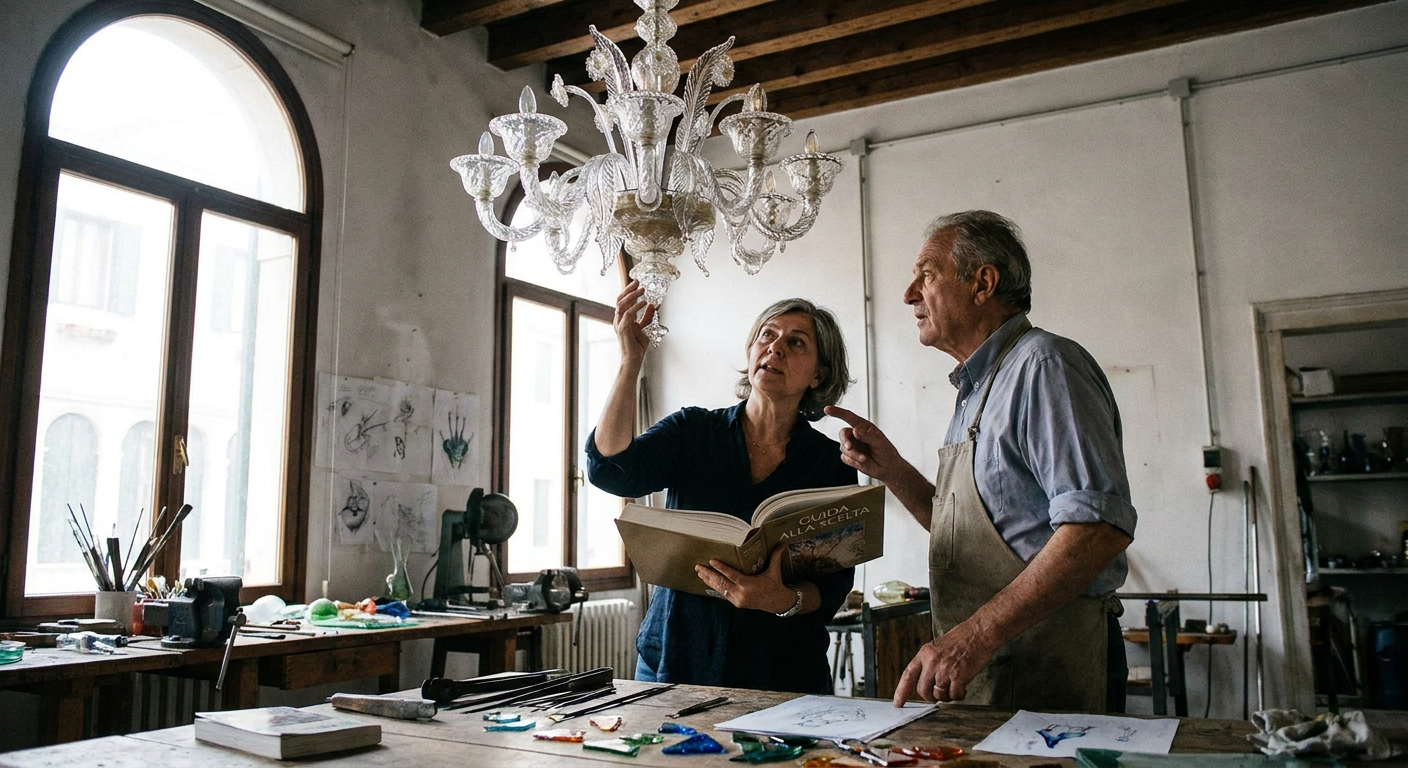
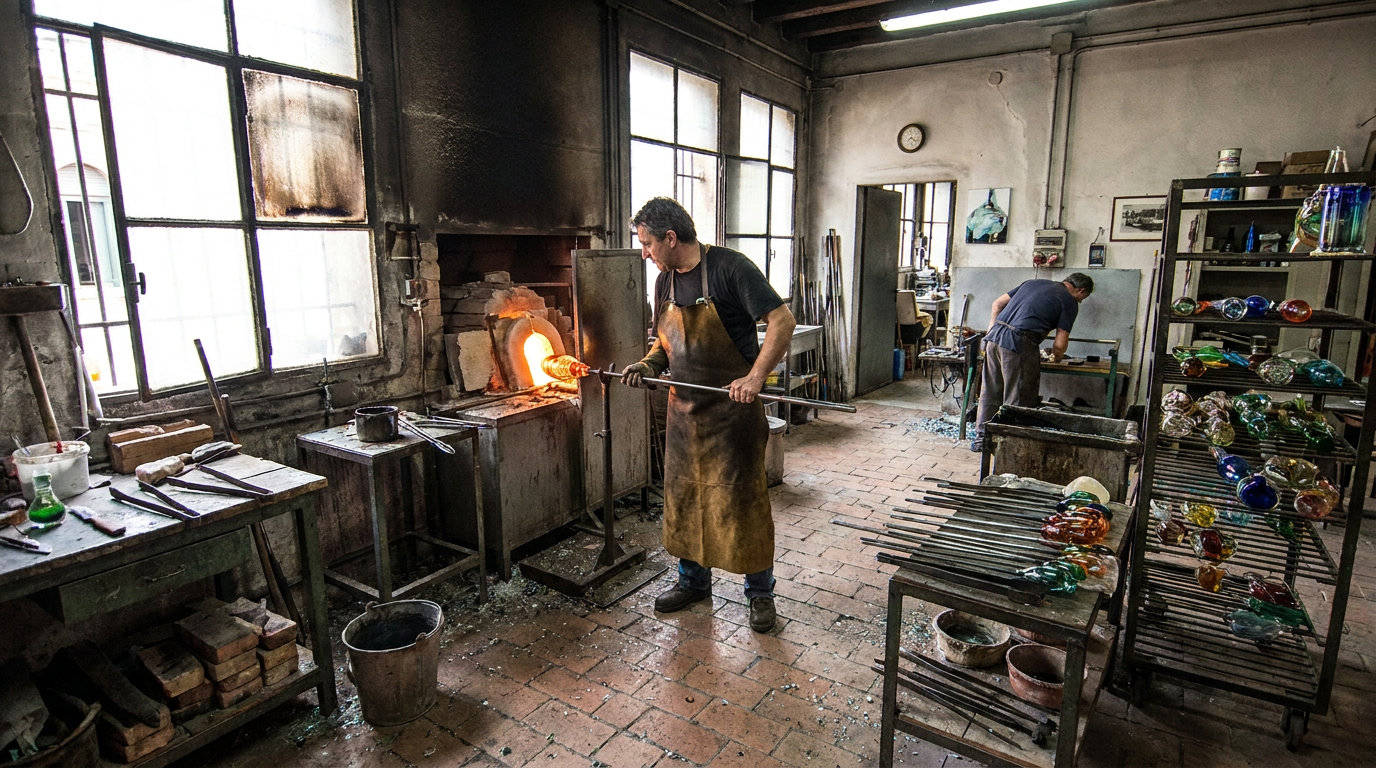
A finished glass pendant can appear effortless, yet its clarity, balance and color emerge from a sequence of demanding decisions. A skilled Murano glass maker must understand how molten material responds to heat, gravity, tools and breath, often within a narrow window of time. The workshop is therefore less like an assembly line and more like a coordinated stage, where each movement prepares the next and experience guides adjustments that cannot always be planned in advance.
The most revealing qualities are not necessarily decorative. Consistent wall thickness influences weight and light diffusion, while a carefully formed neck or edge helps the piece connect cleanly with its supporting hardware. Small variations are natural in handmade production, but they should express the process rather than undermine function. Authentic craftsmanship lies in controlling these variations, preserving the vitality of blown glass while meeting the practical requirements of lighting, interiors and architectural installations.
Where Quality Becomes Visible
Color offers one of the clearest examples of technical depth. Its final appearance depends on the glass composition, temperature, thickness and number of layers, as well as the surrounding light. A sample viewed on a table may behave differently when suspended and illuminated. For this reason, collaboration with an experienced murano glass maker can be especially valuable during bespoke projects, allowing designers to examine proportions, finishes and optical effects before moving toward a larger production.
Quality can also be assessed through details that photographs sometimes conceal. Edges should feel intentional, attachment points should suit the proposed fittings, and repeated pieces should share a recognizable visual rhythm. That does not mean every item must be mechanically identical. In a well-managed artisanal series, slight differences may remain, but dimensions, colors and mounting requirements follow agreed tolerances. Controlled individuality is often the defining advantage of handcrafted glass over anonymous decorative products.
Choosing with Purpose Rather Than Appearance Alone
Selecting a workshop begins with a clear account of the project. Dimensions, quantity, installation setting, desired luminosity and maintenance access all shape what can realistically be produced. Useful conversations go beyond choosing a color from a chart: they explore whether the form can be blown consistently, how the glass will be supported and whether prototypes or samples are appropriate. A capable Murano glass maker translates a visual idea into production language without stripping away its original character.
Provenance, continuity and communication deserve equal attention. A documented workshop history can indicate accumulated knowledge, while a varied portfolio shows whether artisans can move between pendants, plates and complex blown forms. Clear discussion of customization, production stages and expected variations is equally important. The most considered choice is therefore not simply the brightest or most elaborate piece, but the one whose material, construction and purpose align. When those elements meet, Murano glass becomes an active part of the space rather than a decorative afterthought.